By clicking “Accept All”, you agree to the storing of cookies on your device to enhance site navigation, analyze site usage and assist in our marketing efforts as outlined in our privacy policy.
Cockpit vs Praiz in 2026: sales assistant or CRM booster?
Cockpit vs Praiz: compare sales assistant and CRM booster approaches to see which tool secures pipeline visibility, reliable forecasts, and revenue growth.
The essential takeaway: While Cockpit acts as a specialized assistant limited to HubSpot, Praiz functions as a universal CRM booster. By automating data entry everywhere, Praiz ensures complete pipeline visibility and reliable forecasts. This empowers sales leaders to turn conversations into revenue through actionable insights.
Are you struggling with unreliable forecasts because your CRM lacks the granular data from your team's daily calls? The Cockpit vs Praiz comparison addresses this gap by evaluating how each tool automates data capture to secure your pipeline visibility. We identify which solution truly converts raw conversation intelligence into the concrete business insights needed to scale your revenue.
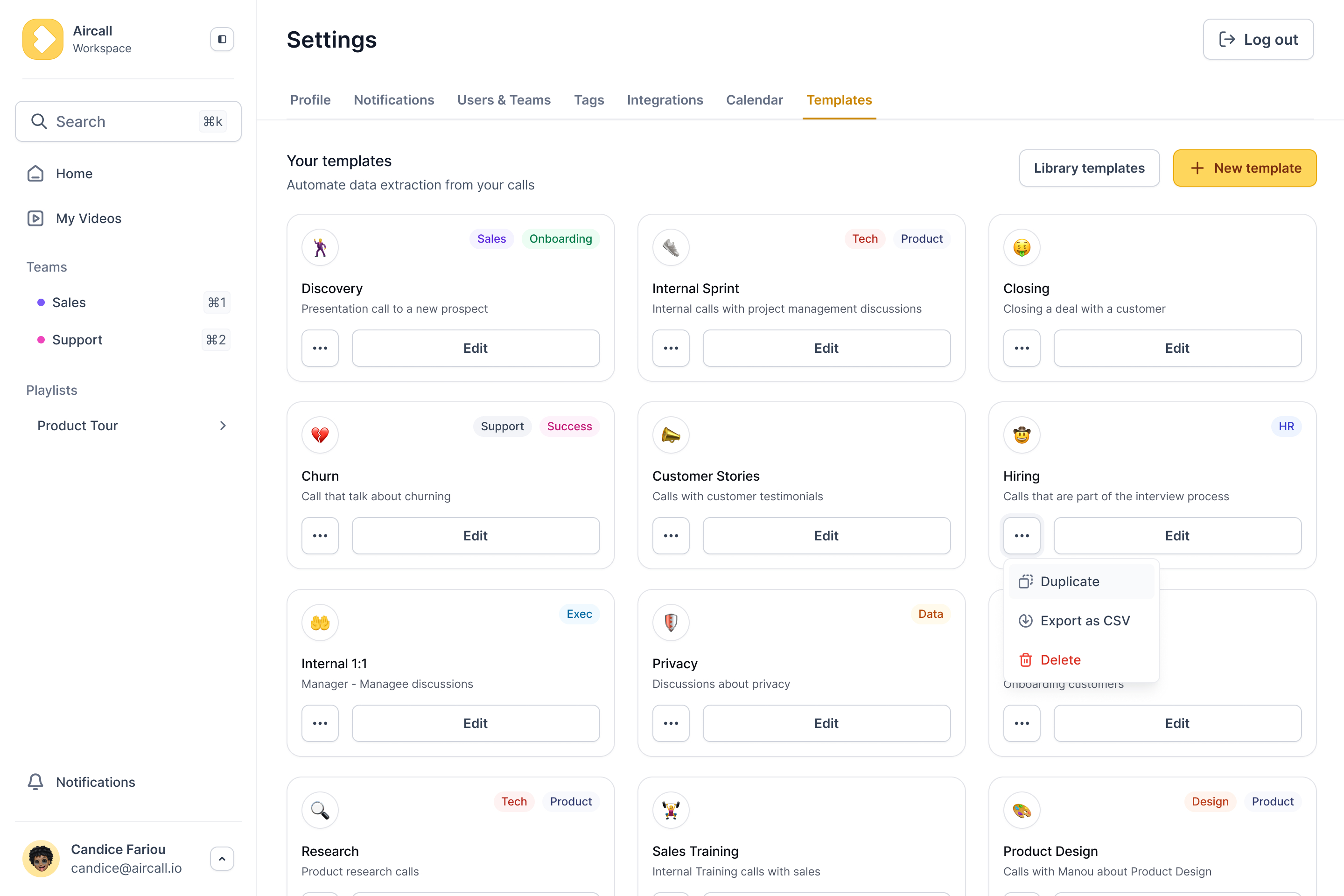
Praiz template dashboard showing structured call analysis by use case.
Two Tools, Two Philosophies: Assistant vs Booster
Cockpit: The Dedicated Sales Assistant
When analyzing a Cockpit vs Praiz comparison, the distinction is immediate. Cockpit positions itself as a deeply integrated sales assistant, designed specifically for the HubSpot ecosystem. It acts as a copilot, automating tasks directly inside this specific CRM rather than standing alone. It handles the heavy lifting so your reps don't have to. Its core features include:
AI Summary for meetings
CRM Autofill for HubSpot fields
AI Coach for call analysis
Praiz: The Universal CRM Booster
Praiz takes a fundamentally different path. It is not just another platform to manage; it acts as a powerful CRM booster. The objective is simple: enhance the tools your teams are already using. This philosophy aims to liberate sales from note-taking and manual entry, regardless of their working environment. The goal isn't to add another tool to the stack. It's to make the existing CRM smarter by feeding it complete, structured, and reliable data from every conversation.
Where Does the Data Live? A Deep Dive into CRM Integration
The difference in philosophy has a direct impact on how each tool handles data integration.
The Specialist vs the Universalist Approach
Cockpit bets everything on being a specialist, designing its AI workflows and automation strictly for HubSpot. That laser focus is its greatest strength, but it remains a hard ceiling for scaling teams. In contrast, Praiz adopts a totally agnostic approach. The goal is to integrate everywhere, removing friction regardless of your current tech stack.
Beyond transcription: coaching and actionable insights
Praiz integrations dashboard showing native connections with calendars, VoIP tools, and CRMs.
Turning conversations into revenue
Cockpit tackles coaching through its "AI Playbook," designed to automatically assess if your sales methodology is applied. It acts as a structured guardrail to help teams stick to the script. Basically, it focuses on standardizing processes across the board. Praiz takes a different path by turning raw audio into actionable data that leaders can actually use. The focus shifts to securing reliable forecasts and gaining clear visibility of field reality, which is the number one headache for any VP Sales.
Customization and real-world impact
Praiz is built to capture the voice of the customer and turn it into a goldmine of insights that fuel better business decisions and, ultimately, increase revenue. You get advanced prompt customization that calibrates insights specifically for your business logic. This precision concretely improves the video conference debrief for sales reps.While Cockpit shines as a specialized assistant for HubSpot teams, Praiz offers a universal strategic edge. By transforming conversations into reliable, structured data within any CRM, Praiz empowers leaders to secure forecasts and drive revenue. It goes beyond simple automation—it provides the actionable visibility needed to master your pipeline reality.
In a revenue context, a sales cockpit is a centralized workspace designed to help representatives execute their daily tasks without constantly switching tabs.
Tools specifically branded as “Cockpit” often function as dedicated assistants, deeply integrated into ecosystems like HubSpot to streamline workflows.
More advanced solutions like Praiz extend this concept by acting as a universal CRM booster. Instead of just providing a task view, Praiz automates conversation data capture across any stack, ensuring your CRM becomes the ultimate, reliable cockpit for strategic decision‑making.
What is the difference between a dashboard and a cockpit?
The distinction lies in actionability. A dashboard is a passive monitoring interface used to visualize KPIs and historical data — it tells you what happened.
A cockpit is an active execution layer designed for piloting — it helps you make things happen.
While traditional cockpit tools focus on task execution, Praiz enhances both layers: it feeds dashboards with accurate, automated conversation data while removing manual CRM updates, transforming your CRM into a proactive revenue engine.
Are specialized Sales Cockpits worth the investment?
A sales cockpit is worth the investment if it significantly reduces administrative friction and improves execution speed.
However, ROI depends on the philosophy behind the tool: “Assistant” versus “Booster.” A specialized cockpit can be valuable for single‑ecosystem users seeking workflow optimization.
For Sales Leaders prioritizing scalability and data reliability across multiple environments, a CRM booster like Praiz delivers stronger value by automating structured insight extraction directly into your existing CRM — without adding unnecessary complexity to your stack.




.webp)




.jpg)
.jpg)